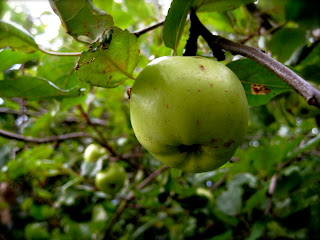
Solar Power of God...
Thursday, 23 July 2009
Posted by emmani at 09:04 4 comments
Labels: beauty, India With Passion..., nature, simplicity
Some People are Just Wise...
Tuesday, 30 June 2009Posted by emmani at 10:31 1 comments
Labels: beauty, dreams, ethical, inspiration, nature, simplicity
Stop and Smell the Roses...
Saturday, 4 October 2008Posted by emmani at 16:50 5 comments
Labels: beauty, family, flowers, garden, home, nature, simplicity
'Leicester Mercury' Article...
Wednesday, 24 September 2008I was taking a walk along the canal with my husband and 2 year old daughter on a Saturday afternoon. I do not usually take bin liners with me on our walks, but I often take my camera. I always take my rubbish home with me as I prefer to recycle what I can. I very often pick up other peoples rubbish as well and deposit it in the nearest bin. I do not however feel self righteous when doing this, just very sad. I did not contact the newspaper to 'moan' about the problem, only to make it known to the public the results of their disregardful actions when they throw litter. I would not know if this was a new or old problem as I have only lived in Leicester for 6 months.
Dear Kim,
I am concerned. This is the planet where my daughter and her future generations will grow up. I do a lot to ensure that I teach her about respect and compassion for the world and it inhabitants. I am very happy that there are people who have the sense to organise volunteer projects. I would be very happy to volunteer for any type of environmental project that is happening in the area. Unfortunately I am leaving Leicester in a few days, so as well as not being able to enjoy the beauty of Abbey Park anymore, I will also not be able to participate in any voluntary clean ups.
Dear Niki,
You have some very wise comments. I agree that we have to educate our children first, to make a difference. You may be interested to read my post about sustainable development in UK schools:
http://indian-earth.blogspot.com/2008/09/helping-hand-in-sustainable-development.html
Please feel free to view my original post and photos at:
http://indian-earth.blogspot.com/2008/09/helping-hand-in-sustainable-development.html
Regards,
Natural Cleaning the 'Naked' Guide...

In June of 2000, the World Health Organization warned that antibacterial products directly contribute to the rise in antibiotic-resistant bacteria. Bacteria and viruses, are naturally, everywhere we go. We can’t escape them and we shouldn’t want to…
Our bodies produce antibodies in response to exposure to bacteria. Those antibodies protect us in the future from the same germs. If there were no exposure to bacteria and viruses, how would we make antibodies?
Babies who are exposed to bacteria and viruses at an early age produce antibodies quicker than babies who are kept in virtually sterile environments. You only have to look at the increase in ‘sick’ babies over the years. Allergies, food intolerances; every ‘yummy mummies’ little precious has something wrong with them these days. What happened to all of the snotty nosed, knee scraped, mucky faced scallywags running around in the mud?
While staying germ-free can prevent the spread of disease and infections, leading a cleanlier lifestyle may be responsible for an increase in allergies among children.
“It’s called the hygiene hypothesis,” says Marc McMorris, M.D, a pediatric allergist at the University of Michigan Health System.
“We’ve developed a cleanlier lifestyle, and our bodies no longer need to fight germs as much as they did in the past. As a result, the immune system has shifted away from fighting infection to developing more allergic tendencies.”
So what is the answer?
Well the usual one that keeps coming up … lets go back to basics and take advice from the elders. Clean naturally.
Most of the research I have done has brought results in the form of a million recipes for a million different things to clean. Now I get a bit impatient when it comes to recipes and my mind starts to wander. By the time the idea of logic has briefly entered my head I overload and end up sitting down for a cup of tea instead…
So simple and natural cleaning is all about understanding the ingredients and how they perform. If you know the basic chemistry of the product, then your common sense will lead you in the right direction without the need for a measuring jug...
The number one in natural fruity freshness…
The citric acid in lemon juice makes it perfect for natural bleaching, disinfecting, deodourising and cutting through grease. Take a cut and squeezed leftover lemon, sprinkle it with bicarbonate of soda and use it to clean just about anything. Rinse the surface after a few minutes with a clean wet cloth.
White distilled vinegar is mildly acidic and leaves no odour behind.
Use to shine windows, wiping away with scrunched up newspaper. As a fabric softener, one cup in the rinse cycle. To clean mineral and lime deposits from taps and ceramics, mix a paste of vinegar and bicarb, leave for a few minutes to work then rinse off thoroughly. Vinegar and water in a spray bottle makes a fantastic deodoriser spray. Vinegar on a damp cloth is great for dusting. Be careful not to use vinegar on marble surfaces.
Just the simple cheap stuff. Of course oil has great moisturising properties, so it makes a wonderful furniture polish. Mix with a little lemon juice or vinegar and buff on with a soft clean cloth. Use olive oil to keep your wicker baskets supple and your hands soft after all that washing up (no fairies round here!)
Multi purpose cleaner, naturally anti bacterial, stain remover and abrasive. It’s also incredibly cheap.
Made exclusively from vegetable oils, it should be 100% olive oil to be classed as ‘Castile’. It lathers up for use in washing up, washing and cleaning, in fact use it for just about anything that needs a good clean or heavy duty degreasing. Grating it makes it easier to use.
Don’t for get the main ingredient for cleaning. Cold water is best for anything stained, warm water helps to lather up soap, boiling water will kill all the nasties and make you a nice cup of tea too.
Sunshine naturally kills off dust mites and mould and air-drying in good weather is quick and gives your laundry that wonderful sunny smell.
Produce oxygen and purify the air from toxins. Top purifiers are Philodendrons, Spider plants, Palms, Ferns and Dracaenas.
It is simple to choose your oils by how you feel when you smell each one. Fresh fruity citrus fragrances are good for cleaning, try lemon, lemongrass, orange or grapefruit. Medicinal fragrances are good for naturally disinfecting: rosemary, lavender, tea tree. Add to vinegar and water and spray on shower curtains and other mildew prone areas for a natural fungicide. Never underestimate the power of pure essential oils and always check the properties before use. Do not use undiluted and avoid contact with skin or plastics when neat.
Flowers...
The perfect finish to a good days spring-cleaning. Fresh flowers will make it all seem worthwhile. If you can pick them from you own garden or get someone else to buy them, then consider yourself extremely lucky!
A very often forgotten ingredient for cleaning. The 'power' of natural cleaning products, needs a little more time to work compared to commercial products. This gives you a well deserved few minutes to sit down, guilt free and savour your tea…
(lemon)(cleaning kit)(vinegar)(bicarb)(borax)(washing line)(oil)(water)(salt)(soap)(essential oil)(plants)(tea)
Posted by emmani at 10:10 9 comments
Labels: ethical, inspiration, natural cleaning, nature, simplicity
Green as a Thistle...
Tuesday, 23 September 2008
Posted by emmani at 00:04 4 comments
Labels: beauty, ethical, inspiration, nature
A Helping Hand in Sustainable Development...
Monday, 22 September 2008
On behalf of the Government, the Department for Education and Skills (DfES) aims to ensure that sustainable development is embedded in the core education agenda across all education and skills sectors. In 2003 they launched the Sustainable Development Action Plan for Education and Skills. The action plan is organised around four objectives :
- Education for sustainable development
- The environmental impact of the Department and its partner bodies
- The environmental impact of the education estate
- Local and global partnership activities
DfES is developing a web-based service, Sustainable Schools , which will bring together sources of advice and practical support for teachers and school heads and governors. Sustainable Schools is designed to provide an on-line community, disseminate good practice and offer a shop window for the many schemes to promote their service to schools."
The increasing stress we put on resources and environmental systems such as water, land and air cannot go on for ever. Especially as the world's population continues to increase and we already see a world where over a billion people live on less than a dollar a day, more than 800 million are malnourished, and over two and a half billion lack access to adequate sanitation.
A widely-used and accepted international definition of sustainable development is: 'development which meets the needs of the present without compromising the ability of future generations to meet their own needs' - Globally we are not even meeting the needs of the present let alone considering the needs of future generations.
Unless we start to make real progress toward reconciling these contradictions, we all, wherever we live, face a future that is less certain and less secure than we in the UK have enjoyed over the past fifty years. We need to make a decisive move toward more sustainable development both because it is the right thing to do - and because it is in our own long-term best interests. It offers the best hope for securing the future."
Extract taken from the UK Sustainable development Government website
Posted by emmani at 08:52 2 comments
Labels: beauty, dreams, ethical, inspiration, nature, recycle, rubbish
A River Runs Through It...
Sunday, 21 September 2008****
Todays Newspaper in India ('The Landfill of Britain')...
Tuesday, 9 September 2008

As part of Britain's efforts to go green and improve the environment, UK councils ask households to carefully separate waste into different categories: plastics, metal, paper and glass so that they can be recycled.
But, according to an investigation by a British TV channel, these bags are shipped to India on the waste black market, which is cheaper. It costs up to £148 (Rs 12,000) to recycle a tonne of rubbish once it is separated but only £40 (Rs 2,800) to ship it to India.
The investigation found that a receipt put into a paper recycling bin in Essex turned up at the top of a stinking rubbish mound in Tamil Nadu. It was traced to the Walton-on-the-Naze home of Geoff Moore.
His receipt for CDs was found by investigators at a sprawling rubbish heap in Tamil Nadu. They also found juice cartons, British newspapers, Walkers crisp packets, UK school reports and plastic bags.
"International waste follows the path of least resistance just like water. India has little resistance to imports of waste," said Gopal Krishna, environmental health researcher at Delhi's Jawaharlal Nehru University. "In fact in India there has been an attempt to alter the very definition of waste in order to keep the waste streams flowing. In the last meeting of the Basel Convention, which bans export of hazardous waste from rich to poor countries, the Indian government said that it encouraged trade in recyclable 'metal scrap'. They defined the problem in a way as to justify its continuation."
India has still not ratified the Basel Convention which would have made it mandatory for India to change its domestic laws and stop this nefarious and dangerous trade.
Syamala Mani, director of waste and resource management group at the Centre for Environment Education describes it as dangerous and harmful. "In the garb of municipal waste we end up with dangerous chemicals like plastics and containers that have been used for hazardous chemicals."
Mani said unscrupulous traders grind this and reproduce recycled containers that could then be used to carry food items causing immense risk to public health.
"Biomedical waste and heavy metals too find their way into India through this waste. And we don't even have a single formal metal recovery waste unit in India. All of it is done cheaply in the unregulated sector, which releases the polluting by-products in the air we breathe and the water in our rivers."
Groups in Tamil Nadu have been trying to fight imported waste that’s steadily piling up in the state.
According to a report, about 180 tonnes of US waste was dumped into farm wells near Coimbatore and another 1,000 tonnes is rotting in Tuticorin port. Two cases relating to waste dumping have come up in TN courts recently — one challenging a panchayat decision to cancel a license given to White Star Fibres Ltd for sorting waste paper.
All UK councils are required to recycle. But after householders separate their rubbish and bin workers collect it, councils pass it on to waste firms, who in turn use subcontractors. They are under no obligation to reveal what they actually do with it.
European Union bans sending waste abroad for dumping but allows it to go overseas if it has already been separated and provided that it is actually recycled.
After the TV report, Britain's Environment Agency promised to investigate the matter. Paul Bettison of the Local Government Authority Environment Board called for a change in the law and said, "If a contractor refuses to reveal where materials are being sold it can undermine the whole process."
Copyright © 2008 Bennett Coleman & Co. Ltd. All rights reserved. For reprint rights: Times Syndication Service
Filthy Liars...

Uncovering the great recycling lie in a trail that leads to India...
By Mark Jordan
6th September 2008
My partially blind, 94-year-old grandmother called me recently. She's a tough old bird, but that morning she was livid.
The 'bin men', for she knows nothing of 'waste technicians', had told her she wasn't recycling properly and should shape up or face a fine.
She has been robbed in her home, conned by a carer and can barely see the one bin she uses, yet now the bin enforcement officers were charging her with endangering the planet.
Stinking shame: Tons of British rubbish dumped on Indian farmland
She's not alone. Twenty thousand tickets for rubbish breaches have been issued in the past year and the Government thinks councils should be able to fine us up to £110 for 'waste receptacle' offences.
My gran's discarded soup tin could land her a bigger fine than the £80 fixed penalty for shoplifting.
I decided to do a little bin snooping of my own.
Now, you would think the people forcing us to sort our recyclables carefully would have a good idea of where they send this green gold for its rebirth. Well, ITV1's Tonight programme quizzed every council in the UK - more than 300 - and 46 told us they had no idea where their cans, paper and glass ended up.
They hand it over to a registered waste company, and much of it is legally shipped abroad for recycling. But if a council, or its contractors, has not sorted the recyclables properly, it risks being dumped.
Some 4,500 miles away in Tamil Nadu, India, environmentalist Nity Jayaraman took me to the rich farmland at the base of the beautiful Nilgiri Hills.
He then began pulling British rubbish from the soil. A Leicester newspaper, Tesco food packaging, bags from Mothercare. There was even a St George's flag.
Nity was furious. 'You're shipping out your garbage, you're shipping out your responsibility. It violates every law, right from the time it entered India,' he said.
Where were the bin police now, I wondered?
Nity explained that a nearby company was supposed to be importing British paper waste and recycling it. Instead, it buys the UK's poorly sorted waste, sifts it with dollar-a-day labour, and then dumps the unusable stuff on farmland.
According to the Environment Agency, dumping unsorted waste in poor countries is illegal. Yet here I am, staring down at a £2 Asda Indian selection pack in the soil of an Indian farm.
A farmer explained the rubbish goes 30ft deep, so we hired a JCB digger and began excavating.

All four councils collect intermingled recyclables, then send them to a sorting facility, which will sell them on to be recycled. All four authorities told us they worked with licensed UK contractors.
But they added they were 'concerned' by our findings and would investigate 'where appropriate'.
All these people believed this rubbish would have been recycled. Instead, it's rotting in a pit next to an Indian national park that is home to wild elephants.
My producer asked me to say something to camera. As putrid liquid leaked into my boots, I bellowed on about it being international fly-tipping on an unimaginable scale.
Nity and his investigators have uncovered ten more sites full of British and American waste.
In recent years, the Environment Agency has intercepted thousands of tons of unsorted 'green' waste heading for Asia.
One container, supposed to be full of paper, held so much organic waste that the methane build-up caused the container to explode.
From what I witnessed in India, official obsession with snooping on you, me and Grandma Mary for wheelie-bin offences seems far less effective when it comes to intercepting 20-ton containers packed with improperly sorted waste sailing from our shores.
Back home, I wanted to know how it could make financial sense to ship waste around the planet.
I met Ron Humphreys of Abitibi Bowater. He runs one of the biggest recycling paper mills in Britain. Here, your recycled paper is turned into newsprint and paper cups.
He claimed many councils and contractors fail to keep paper separate from other waste. He showed me some rejected bales in a warehouse.
We cut one open and found a lavatory seat, shoes, plastic bottles and underwear. This would bring his machinery to a halt, so the bales are rejected and sold on as unrecycled waste to UK brokers.
Ron said: 'No one in Britain can afford to start separating that, so it gets shipped abroad where there's dirt-cheap labour to sift it. What locals don't want will end up dumped.'
I had brought back a bag of mail I pulled from the Indian dump.
I knocked on the door of a Mr Geoff Moore in Essex, told him I knew he loved Sixties music and handed him a recovered CD invoice.
When I explained its 9,000 mile round-trip voyage, he seemed saddened: 'What's green in that? All of us are told to do our bit, when people in this street hear about this they'll think to themselves, "Why bother?"'
There are few of us who would argue against recycling. What is galling is that some of the councils snooping on us are failing to ensure their collections are properly sorted - by the ton-load.
Paul Bettison, chairman of the Local Government Association's environment board, admitted: 'Local authorities should be attempting to find out what happens to their waste - simply sending it to a sorting facility does not guarantee that it is going to be recycled.'
So next time you catch the man from your town hall sniffing round your recycling bag, ask him where it all goes and how well it will be sorted.
In areas where councils operate a system where everything recyclable ends up in the same bin, one in three won't have a clue.
****
Find this story at www.dailymail.co.uk/news/article-1053015/Uncovering-great-recycling-lie-trail-leads-India.html
Part of the Daily Mail, The Mail on Sunday, Evening Standard & Metro Media Group
© 2008 Associated Newspapers Ltd
Washing Powder Doesn't Grow on Trees...
Saturday, 6 September 2008

I just washed my hair with a mix of 2 parts Shikakai, 1 part Amla and 1 part Neem... I don't really like the way my hair feels, maybe I didn't wash it out enough, maybe because I made the paste a bit thicker this time. I'll give it another go with a runnier mix and wash it out more thoroughly next time. If my hair still feels icky then I'll try without neem, then without amla.
Amla is said to make your hair lose it's red tones, which is a good thing for me because I'm trying to grow out all the chemicals I've saturated my hair with in the past, leaving it a bit coppery. So the more brown the better.
Neem is said to leave a slight tinge of green on fairer hair, which is quite scary, so I hope to God I don't end up looking like an Oompa loompa
Posted by emmani at 13:51 1 comments
Labels: beauty, ethical, home, inspiration, natural cleaning, nature, organic, simplicity
Rhythm and Bubbles...
Tuesday, 2 September 2008Posted by emmani at 08:54 3 comments
Labels: beauty, dreams, family, inspiration, nature
Walking Through Time with Nature...
Monday, 25 August 2008Posted by emmani at 11:14 3 comments
Labels: beauty, dreams, flowers, inspiration, nature, simplicity